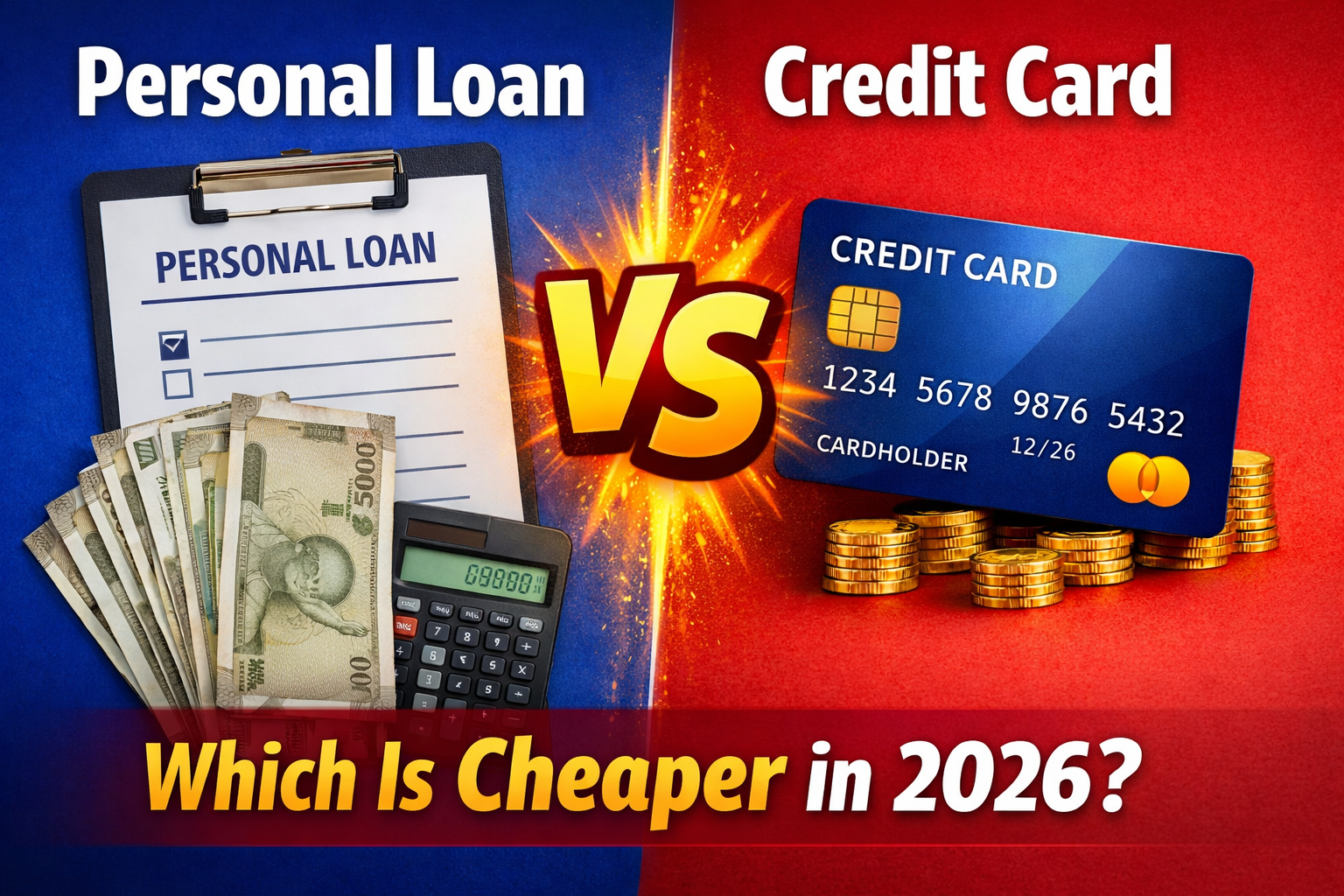
Personal Loan vs Credit Card – Which Is Cheaper in 2026?
When money is urgently needed, most people face the same confusion: Is it better to take a personal loan or use a credit card?
At first glance, both seem easy. But when you look closely at the total cost, interest rate, and long-term impact, the difference is huge.
In this detailed guide, we break it down in a simple and honest way so you can decide which option is really cheaper and safer in 2026.
Understanding a Personal Loan
A personal loan is an unsecured loan provided by banks and NBFCs. You borrow a fixed amount and repay it through monthly EMIs.
Key Features of Personal Loan:
- Fixed rate of interest
- Pre-calculated fixed EMI every month
- Tenure ranging from 1 to 5 years
- Lower interest compared to credit cards
- Ideal for planned or big expenses
Personal loans are commonly used for medical emergencies, weddings, travel, or debt consolidation.
Credit Card Usage as a Loan: An Insight
When people talk about a “credit card loan,” it usually means:
- Maintaining an unpaid credit card balance
- Converting purchases into EMIs
- Withdrawing cash using a credit card
Important Characteristics of Credit Card Loans:
- Very high interest rates
- Interest applied daily
- Flexible repayment (minimum due option)
- Easy access but extremely expensive
Credit cards feel convenient, but careless usage can easily push you into debt.
Interest Rate Comparison (2026)
| Borrowing Option | Interest Rate |
|---|---|
| Personal Loan | 10% – 24% per year |
| Credit Card | 30% – 48% per year |
👉 Personal loans are clearly cheaper in terms of interest.
EMI & Total Cost Comparison (Real Example)
Assume you borrow ₹1,00,000 for 12 months.
Personal Loan
- Interest Rate: 14%
- EMI per Month: Approximate fixed EMI
- Total Amount Paid: Lower overall cost
Credit Card
- Interest Rate: 36%
- Monthly interest compounding
- Total Amount Paid: ₹1,20,000 or more
Credit card borrowing can cost an extra ₹12,000 to ₹15,000 in interest.
Comparison of Fees & Hidden Charges
Personal Loan Charges
- Processing fee: 1%–3%
- Foreclosure charges (sometimes)
- Mostly transparent pricing
Credit Card Charges
- Late payment fees
- Tax on interest
- Cash withdrawal charges
- Interest-on-interest penalty
Credit cards have significantly more hidden charges than personal loans.
Credit Score Impact
Personal Loan
Timely EMI payments improve your credit score.
Credit Card
High credit utilization and minimum due payments can reduce your credit score.
Personal loans are generally safer when credit score matters.
When Is a Personal Loan a Better Option?
- You need a large amount
- You want predictable monthly EMIs
- You plan to repay over several months or years
- You want lower interest and peace of mind
When Can a Credit Card Be Cheaper?
A credit card is cheaper only when:
- You repay the full bill within 30–45 days
- You use genuine no-cost EMI offers
- You avoid paying only the minimum due
⚠️ Otherwise, it becomes very expensive.
Personal Loan vs Credit Card – Quick Comparison
| Factor | Personal Loan | Credit Card |
|---|---|---|
| Interest Rate | Low | Very High |
| EMI Stability | Fixed | Flexible but risky |
| Hidden Charges | Few | Many |
| Credit Score Impact | Positive | Risky if misused |
| Best For | Long-term needs | Very short-term use |
Final Verdict: Which Is Cheaper?
✅ Personal Loan is cheaper in most cases.
❌ Credit Cards are costly if the balance is not cleared.
Simple Rule to Remember:
- Short term (≤ 30 days): Credit Card (full payment only)
- More than 3 months: Personal Loan
Smart Money Tips
- Always compare interest rates before borrowing
- Never rely on minimum credit card payments
- Use EMI calculators before taking loans
- Maintain a good credit score to get lower interest rates